Festakt Akademie Musiktheater Heute
Und Sonst Gute Nacht
Adrian Laugsch - Silberschwere Lider (World premiere)
Role: Die Mutter
More Info TBA
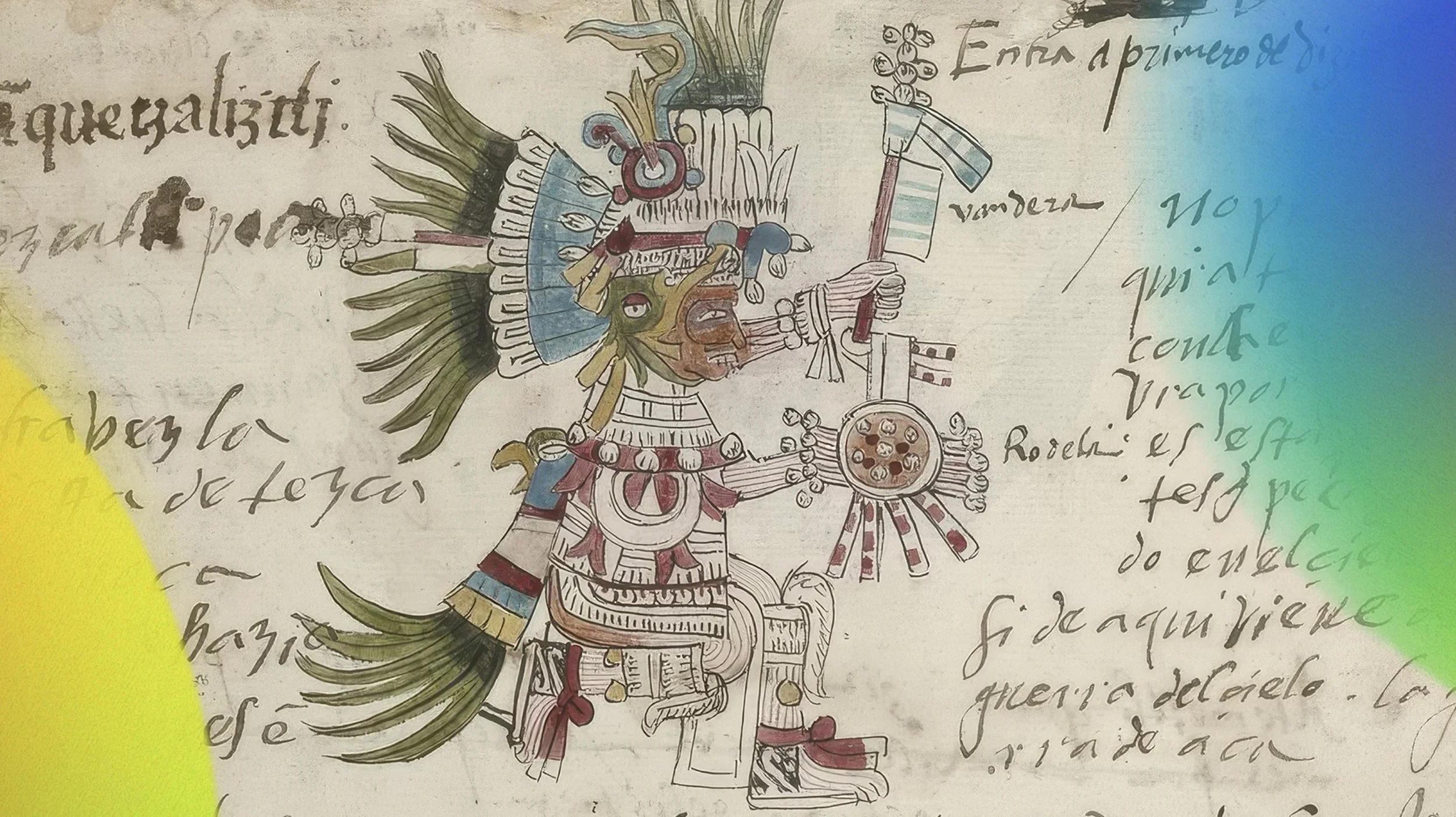
MAXIMILIANO SOTO MAYORGA - Xochiyaoyotl
In a world where gods were fed by humans, a child is trained to fight in war and preserve the sun god with his life.
“Xochiyaoyotl“, translated as ‘flower wars’, recalls rituals of Aztec martial arts that was wiped out by the Spanish conquest. We can only imagine what this combat – that challenged the belief in tomorrow every night anew - looked like.
David Camargo, Amauta García and Maximiliano Soto Mayorga develop a music theatre piece that lies between myth and memory, in which music, space and performance emerge from the physicality of the combatants.
“Xochiyaoyotl” is the winner of the OPEN CALL of the Münchener Biennale on the theme of “martial arts”. Chosen from among 85 submissions, the production was selected by an international jury consisting of Carola Bauckholt, Kenny Savelson, Vigdís Jakobsdóttir, Martin Minarik, Sarah Maria Sun, and Toshiki Okada.
Composition: MAXIMILIANO SOTO MAYORGA
Set, costume and instrument design: DAVID CAMARGO
Libretto, video, dramaturgy: AMAUTA GARCÍA
Dramaturgy: JULIAN KÄMPER
Soprano: LAURE-CATHERINE BEYERS
Countertenor: JOHANNES WIENERS
Percussion: MATHIAS LACHENMAYR, DAAN WILMS
Contrabass-clarinet: PAULA HÄNI
Electric guitar: JOHANNES ÖLLINGER
Cello: MYRIAM GARCÍA FIDALGO
MAXIMILIANO SOTO MAYORGA - Xochiyaoyotl
In a world where gods were fed by humans, a child is trained to fight in war and preserve the sun god with his life.
“Xochiyaoyotl“, translated as ‘flower wars’, recalls rituals of Aztec martial arts that was wiped out by the Spanish conquest. We can only imagine what this combat – that challenged the belief in tomorrow every night anew - looked like.
David Camargo, Amauta García and Maximiliano Soto Mayorga develop a music theatre piece that lies between myth and memory, in which music, space and performance emerge from the physicality of the combatants.
“Xochiyaoyotl” is the winner of the OPEN CALL of the Münchener Biennale on the theme of “martial arts”. Chosen from among 85 submissions, the production was selected by an international jury consisting of Carola Bauckholt, Kenny Savelson, Vigdís Jakobsdóttir, Martin Minarik, Sarah Maria Sun, and Toshiki Okada.
Composition: MAXIMILIANO SOTO MAYORGA
Set, costume and instrument design: DAVID CAMARGO
Libretto, video, dramaturgy: AMAUTA GARCÍA
Dramaturgy: JULIAN KÄMPER
Soprano: LAURE-CATHERINE BEYERS
Countertenor: JOHANNES WIENERS
Percussion: MATHIAS LACHENMAYR, DAAN WILMS
Contrabass-clarinet: PAULA HÄNI
Electric guitar: JOHANNES ÖLLINGER
Cello: MYRIAM GARCÍA FIDALGO
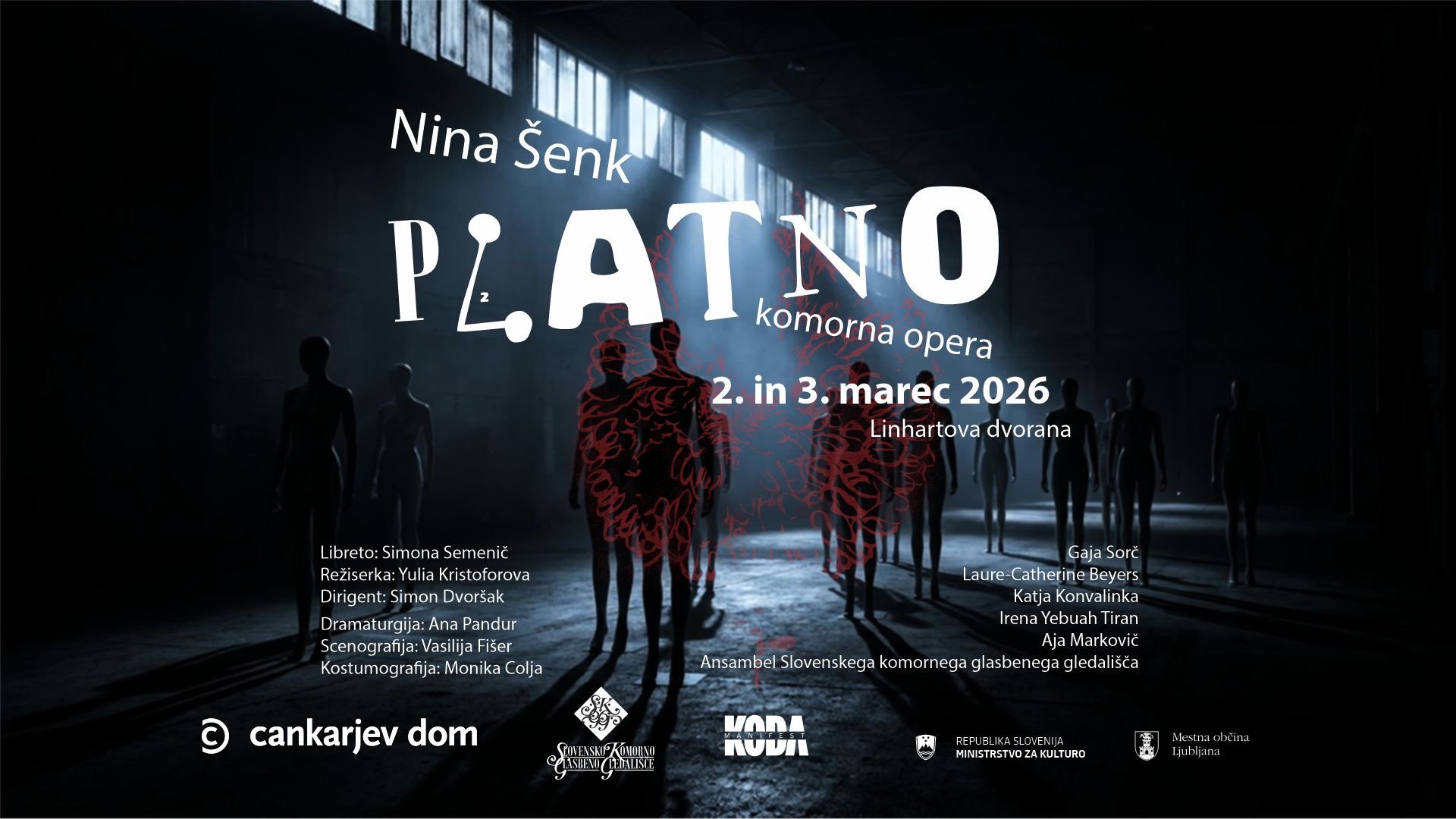
Nina Šenk - Canvas
Duration: 50 minutes, no intermission
The performance will be in English with Slovenian surtitles.
Libretto: Simona Semenič
Director: Yulia Kristoforova
Conductor: Simon Dvoršak
Dramaturgy and Movement Direction: Ana Pandur
Set Design: Vasilija Fišer
Costume Design: Monika Colja
Performers: Gaja Sorč, Laure-Catherine Beyers, Katja Konvalinka, Irena Yebuah Tiran, Aja Markovič
Ensemble of the Slovenian Chamber Music Theatre
“Opera Platno is not a story about love, but a story about longing intertwined with reality – a cross-section of a single, simultaneous moment in the lives of four women. Through four protagonists – women of different ages, backgrounds, and pasts who could exist anywhere and at any time – memories, projections, desires, and longings intertwine; an architecture of emotions, fantasies, and fears, alongside sudden intrusions of reality.
We access their longings, dreams, fears, and the limits of their existence through their reflections on the absent Don Juan, who represents a playground and a field of possibilities – in fact, just one of many possible playgrounds that could be anything else; this time, it happens to be Don Juan. In mirroring this figure, the production at times also exposes the process by which women predefine themselves through the imaginary offered by the promise of Don Juan. Don Juan does not exist; there are countless Don Juans at once – each protagonist adapts him to her own fantasy and arranges him according to her desires.
Platno (Canvas) is not a metaphor for passivity, but an active field of resistance, a kind of manifesto for telling one’s own story with one’s own emphases, as the protagonists themselves wish. In a world where femininity has historically been constructed as a response to the verticality of the idea of man, the protagonists of Platno instead create their own (fantastical) world in which they decide their own place within it – even when, in circumstances permeated by violence, they dissociate from reality and embody the decision to endure as a form of resistance against oppression.
The protagonists are not victims defined by the male gaze; on the contrary, through their vitality and imagination they give meaning to the empty point, and in the face of intrusions of the real, violence, and cruelty, they create a space that builds resilience, community, and a way forward. They devise their own lavender fields – inspiration, a safe space – lavender fields that represent a retreat from reality, yet also allow them to look at themselves with distance and a good measure of empathy.
Their fate is not a matter of romantic waiting, but of the raw power of existence. Even within the rhythm of the factory, the women preserve their autonomy through humor, cynicism, and an unyielding will to live. They move through their own existence as beings in constant motion. Their fate is not a matter of romantic longing, but of bare survival; they fight to make their fantasies legitimate and to prevent life from slipping away too soon.”
Composer Nina Šenk received the Johann Joseph Fux Prize in 2022 for the opera Platno. The work premiered in October 2023 in Graz.
MAXIMILIANO SOTO MAYORGA - Xochiyaoyotl
In a world where gods were fed by humans, a child is trained to fight in war and preserve the sun god with his life.
“Xochiyaoyotl“, translated as ‘flower wars’, recalls rituals of Aztec martial arts that was wiped out by the Spanish conquest. We can only imagine what this combat – that challenged the belief in tomorrow every night anew - looked like.
David Camargo, Amauta García and Maximiliano Soto Mayorga develop a music theatre piece that lies between myth and memory, in which music, space and performance emerge from the physicality of the combatants.
“Xochiyaoyotl” is the winner of the OPEN CALL of the Münchener Biennale on the theme of “martial arts”. Chosen from among 85 submissions, the production was selected by an international jury consisting of Carola Bauckholt, Kenny Savelson, Vigdís Jakobsdóttir, Martin Minarik, Sarah Maria Sun, and Toshiki Okada.
Composition: MAXIMILIANO SOTO MAYORGA
Set, costume and instrument design: DAVID CAMARGO
Libretto, video, dramaturgy: AMAUTA GARCÍA
Dramaturgy: JULIAN KÄMPER
Soprano: LAURE-CATHERINE BEYERS
Countertenor: JOHANNES WIENERS
Percussion: MATHIAS LACHENMAYR, DAAN WILMS
Contrabass-clarinet: PAULA HÄNI
Electric guitar: JOHANNES ÖLLINGER
Cello: MYRIAM GARCÍA FIDALGO
MAXIMILIANO SOTO MAYORGA - Xochiyaoyotl
In a world where gods were fed by humans, a child is trained to fight in war and preserve the sun god with his life.
“Xochiyaoyotl“, translated as ‘flower wars’, recalls rituals of Aztec martial arts that was wiped out by the Spanish conquest. We can only imagine what this combat – that challenged the belief in tomorrow every night anew - looked like.
David Camargo, Amauta García and Maximiliano Soto Mayorga develop a music theatre piece that lies between myth and memory, in which music, space and performance emerge from the physicality of the combatants.
“Xochiyaoyotl” is the winner of the OPEN CALL of the Münchener Biennale on the theme of “martial arts”. Chosen from among 85 submissions, the production was selected by an international jury consisting of Carola Bauckholt, Kenny Savelson, Vigdís Jakobsdóttir, Martin Minarik, Sarah Maria Sun, and Toshiki Okada.
Composition: MAXIMILIANO SOTO MAYORGA
Set, costume and instrument design: DAVID CAMARGO
Libretto, video, dramaturgy: AMAUTA GARCÍA
Dramaturgy: JULIAN KÄMPER
Soprano: LAURE-CATHERINE BEYERS
Countertenor: JOHANNES WIENERS
Percussion: MATHIAS LACHENMAYR, DAAN WILMS
Contrabass-clarinet: PAULA HÄNI
Electric guitar: JOHANNES ÖLLINGER
Cello: MYRIAM GARCÍA FIDALGO
MAXIMILIANO SOTO MAYORGA - Xochiyaoyotl (World Premiere)
In a world where gods were fed by humans, a child is trained to fight in war and preserve the sun god with his life.
“Xochiyaoyotl“, translated as ‘flower wars’, recalls rituals of Aztec martial arts that was wiped out by the Spanish conquest. We can only imagine what this combat – that challenged the belief in tomorrow every night anew - looked like.
David Camargo, Amauta García and Maximiliano Soto Mayorga develop a music theatre piece that lies between myth and memory, in which music, space and performance emerge from the physicality of the combatants.
“Xochiyaoyotl” is the winner of the OPEN CALL of the Münchener Biennale on the theme of “martial arts”. Chosen from among 85 submissions, the production was selected by an international jury consisting of Carola Bauckholt, Kenny Savelson, Vigdís Jakobsdóttir, Martin Minarik, Sarah Maria Sun, and Toshiki Okada.
Composition: MAXIMILIANO SOTO MAYORGA
Set, costume and instrument design: DAVID CAMARGO
Libretto, video, dramaturgy: AMAUTA GARCÍA
Dramaturgy: JULIAN KÄMPER
Soprano: LAURE-CATHERINE BEYERS
Countertenor: JOHANNES WIENERS
Percussion: MATHIAS LACHENMAYR, DAAN WILMS
Contrabass-clarinet: PAULA HÄNI
Electric guitar: JOHANNES ÖLLINGER
Cello: MYRIAM GARCÍA FIDALGO
Nina Šenk - Canvas
Duration: 50 minutes, no intermission
The performance will be in English with Slovenian surtitles.
Libretto: Simona Semenič
Director: Yulia Kristoforova
Conductor: Simon Dvoršak
Dramaturgy and Movement Direction: Ana Pandur
Set Design: Vasilija Fišer
Costume Design: Monika Colja
Performers: Gaja Sorč, Laure-Catherine Beyers, Katja Konvalinka, Irena Yebuah Tiran, Aja Markovič
Ensemble of the Slovenian Chamber Music Theatre
“Opera Platno is not a story about love, but a story about longing intertwined with reality – a cross-section of a single, simultaneous moment in the lives of four women. Through four protagonists – women of different ages, backgrounds, and pasts who could exist anywhere and at any time – memories, projections, desires, and longings intertwine; an architecture of emotions, fantasies, and fears, alongside sudden intrusions of reality.
We access their longings, dreams, fears, and the limits of their existence through their reflections on the absent Don Juan, who represents a playground and a field of possibilities – in fact, just one of many possible playgrounds that could be anything else; this time, it happens to be Don Juan. In mirroring this figure, the production at times also exposes the process by which women predefine themselves through the imaginary offered by the promise of Don Juan. Don Juan does not exist; there are countless Don Juans at once – each protagonist adapts him to her own fantasy and arranges him according to her desires.
Platno (Canvas) is not a metaphor for passivity, but an active field of resistance, a kind of manifesto for telling one’s own story with one’s own emphases, as the protagonists themselves wish. In a world where femininity has historically been constructed as a response to the verticality of the idea of man, the protagonists of Platno instead create their own (fantastical) world in which they decide their own place within it – even when, in circumstances permeated by violence, they dissociate from reality and embody the decision to endure as a form of resistance against oppression.
The protagonists are not victims defined by the male gaze; on the contrary, through their vitality and imagination they give meaning to the empty point, and in the face of intrusions of the real, violence, and cruelty, they create a space that builds resilience, community, and a way forward. They devise their own lavender fields – inspiration, a safe space – lavender fields that represent a retreat from reality, yet also allow them to look at themselves with distance and a good measure of empathy.
Their fate is not a matter of romantic waiting, but of the raw power of existence. Even within the rhythm of the factory, the women preserve their autonomy through humor, cynicism, and an unyielding will to live. They move through their own existence as beings in constant motion. Their fate is not a matter of romantic longing, but of bare survival; they fight to make their fantasies legitimate and to prevent life from slipping away too soon.”
Composer Nina Šenk received the Johann Joseph Fux Prize in 2022 for the opera Platno. The work premiered in October 2023 in Graz.
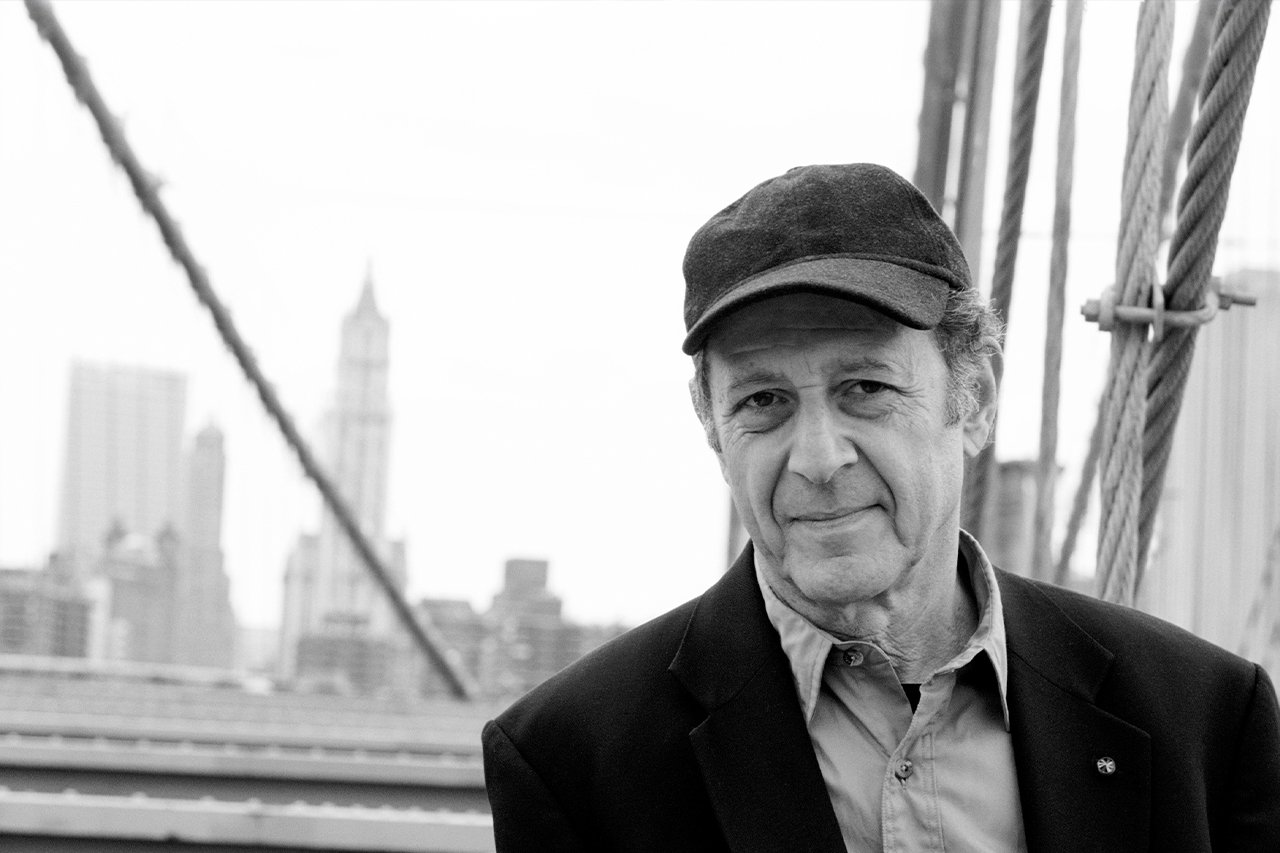
Steve Reich - Music for 18 Musicians
TICKETS: https://www.ntry.at/elevatefestival2026/performances/26260?l=en
Steve Reich (*1936) is considered one of the most influential composers of our time and a central figure of musical minimalism. With his early tape pieces, phase-shifting techniques, and a radically new understanding of pulse, repetition, and process, he fundamentally transformed the listening experience of contemporary music from the 1960s onward. His work continues to resonate far beyond the new music scene—into electronic music, pop, jazz, and film music—making him one of the most enduringly influential sound artists of the 20th and 21st centuries.
Music for 18 Musicians (1976) is regarded as Reich’s seminal work and marks a turning point in his oeuvre. The approximately one-hour piece is based on a cycle of eleven harmonic “sections,” sustained by a continuous pulse that is perceived less as a strict meter and more as a form of energetic breathing. From intricately interlocking patterns emerge flowing, shimmering layers of sound that evolve organically through the smallest of changes—an exemplary realization of Reich’s concept of “process music.”
The extraordinary instrumentation—voices, pianos, marimbas, vibraphones, clarinets, strings, and percussion—forms a collective instrument in which individual lines merge into a transparent, warm, and at the same time hypnotic overall sound.
The performance is realized in cooperation with Institute 1, Institute 4, and Institute 7 of the Kunstuniversität Graz, as well as the master’s program Performance Practice in Contemporary Music (PPCM), which has made this project possible. Students of KUG will perform on stage. The musical direction is undertaken by Klangforum Wien, ensuring that the characteristic flow of sound, balance, and spatial breath of this music are carefully shaped.
Musicians
Violin – Szymon Kałużny
Cello – Mina Zakich
Clarinet 1 – Dacil Guerra Guzmàn
Clarinet 2 – Michele Fontana
Voice 1 – Burcu Melis Demiray
Voice 2 – Laure-Catherine Beyers
Voice 3 – Christine Rainer
Voice 4 – Ellen Rose Kelly
Piano 1 – Maria Iaiza
Piano 2 – Anna Ostojic
Piano 3 – Martin Lejtman
Piano 4 – Markus Koropp
Percussion 1 – Mario Rueda
Percussion 2 – Daichi Kutsuna
Percussion 3 – Sara Borisova Chakarova
Percussion 4 – Jacob Bauer
Percussion 5 – Mia Belak
Percussion 6 – Felix Karner
Percussion 7 – Simon Barath
Artistic Direction: Lukas Schiske, Andreas Nyqvist (Klangforum Wien), Andrey Doynikov (PPCM Vocal)
Nina Šenk - Canvas
Duration: 50 minutes, no intermission
The performance will be in English with Slovenian surtitles.
Libretto: Simona Semenič
Director: Yulia Kristoforova
Conductor: Simon Dvoršak
Dramaturgy and Movement Direction: Ana Pandur
Set Design: Vasilija Fišer
Costume Design: Monika Colja
Performers: Gaja Sorč, Laure-Catherine Beyers, Katja Konvalinka, Irena Yebuah Tiran, Aja Markovič
Ensemble of the Slovenian Chamber Music Theatre
“Opera Platno is not a story about love, but a story about longing intertwined with reality – a cross-section of a single, simultaneous moment in the lives of four women. Through four protagonists – women of different ages, backgrounds, and pasts who could exist anywhere and at any time – memories, projections, desires, and longings intertwine; an architecture of emotions, fantasies, and fears, alongside sudden intrusions of reality.
We access their longings, dreams, fears, and the limits of their existence through their reflections on the absent Don Juan, who represents a playground and a field of possibilities – in fact, just one of many possible playgrounds that could be anything else; this time, it happens to be Don Juan. In mirroring this figure, the production at times also exposes the process by which women predefine themselves through the imaginary offered by the promise of Don Juan. Don Juan does not exist; there are countless Don Juans at once – each protagonist adapts him to her own fantasy and arranges him according to her desires.
Platno (Canvas) is not a metaphor for passivity, but an active field of resistance, a kind of manifesto for telling one’s own story with one’s own emphases, as the protagonists themselves wish. In a world where femininity has historically been constructed as a response to the verticality of the idea of man, the protagonists of Platno instead create their own (fantastical) world in which they decide their own place within it – even when, in circumstances permeated by violence, they dissociate from reality and embody the decision to endure as a form of resistance against oppression.
The protagonists are not victims defined by the male gaze; on the contrary, through their vitality and imagination they give meaning to the empty point, and in the face of intrusions of the real, violence, and cruelty, they create a space that builds resilience, community, and a way forward. They devise their own lavender fields – inspiration, a safe space – lavender fields that represent a retreat from reality, yet also allow them to look at themselves with distance and a good measure of empathy.
Their fate is not a matter of romantic waiting, but of the raw power of existence. Even within the rhythm of the factory, the women preserve their autonomy through humor, cynicism, and an unyielding will to live. They move through their own existence as beings in constant motion. Their fate is not a matter of romantic longing, but of bare survival; they fight to make their fantasies legitimate and to prevent life from slipping away too soon.”
Composer Nina Šenk received the Johann Joseph Fux Prize in 2022 for the opera Platno. The work premiered in October 2023 in Graz.
Nina Šenk - Canvas
Duration: 50 minutes, no intermission
The performance will be in English with Slovenian surtitles.
Libretto: Simona Semenič
Director: Yulia Kristoforova
Conductor: Simon Dvoršak
Dramaturgy and Movement Direction: Ana Pandur
Set Design: Vasilija Fišer
Costume Design: Monika Colja
Performers: Gaja Sorč, Laure-Catherine Beyers, Katja Konvalinka, Irena Yebuah Tiran, Aja Markovič
Ensemble of the Slovenian Chamber Music Theatre
“Opera Platno is not a story about love, but a story about longing intertwined with reality – a cross-section of a single, simultaneous moment in the lives of four women. Through four protagonists – women of different ages, backgrounds, and pasts who could exist anywhere and at any time – memories, projections, desires, and longings intertwine; an architecture of emotions, fantasies, and fears, alongside sudden intrusions of reality.
We access their longings, dreams, fears, and the limits of their existence through their reflections on the absent Don Juan, who represents a playground and a field of possibilities – in fact, just one of many possible playgrounds that could be anything else; this time, it happens to be Don Juan. In mirroring this figure, the production at times also exposes the process by which women predefine themselves through the imaginary offered by the promise of Don Juan. Don Juan does not exist; there are countless Don Juans at once – each protagonist adapts him to her own fantasy and arranges him according to her desires.
Platno (Canvas) is not a metaphor for passivity, but an active field of resistance, a kind of manifesto for telling one’s own story with one’s own emphases, as the protagonists themselves wish. In a world where femininity has historically been constructed as a response to the verticality of the idea of man, the protagonists of Platno instead create their own (fantastical) world in which they decide their own place within it – even when, in circumstances permeated by violence, they dissociate from reality and embody the decision to endure as a form of resistance against oppression.
The protagonists are not victims defined by the male gaze; on the contrary, through their vitality and imagination they give meaning to the empty point, and in the face of intrusions of the real, violence, and cruelty, they create a space that builds resilience, community, and a way forward. They devise their own lavender fields – inspiration, a safe space – lavender fields that represent a retreat from reality, yet also allow them to look at themselves with distance and a good measure of empathy.
Their fate is not a matter of romantic waiting, but of the raw power of existence. Even within the rhythm of the factory, the women preserve their autonomy through humor, cynicism, and an unyielding will to live. They move through their own existence as beings in constant motion. Their fate is not a matter of romantic longing, but of bare survival; they fight to make their fantasies legitimate and to prevent life from slipping away too soon.”
Composer Nina Šenk received the Johann Joseph Fux Prize in 2022 for the opera Platno. The work premiered in October 2023 in Graz.
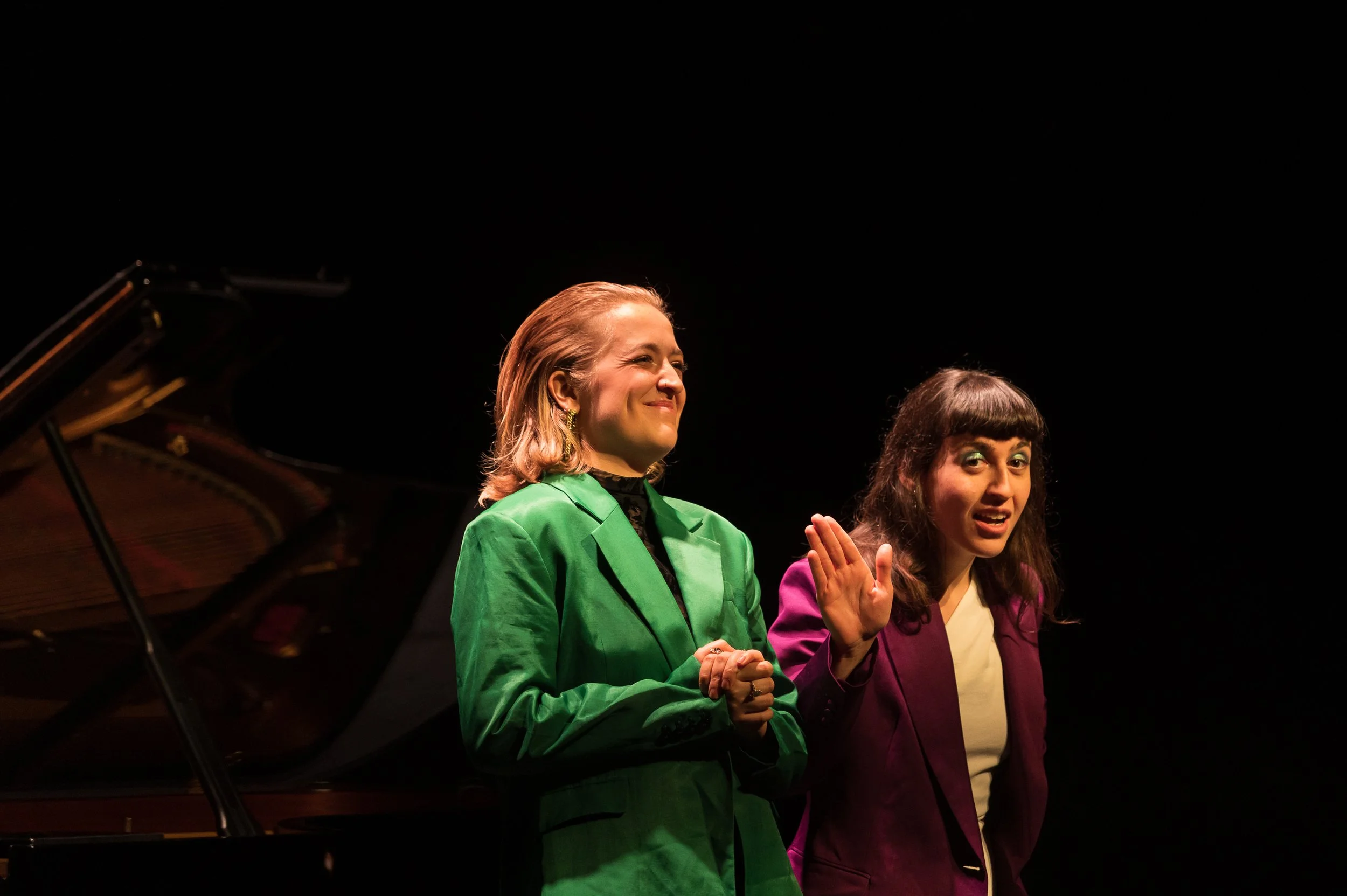
DUO ARDEA - Got Lost, Travelling through soundscapes
Freitag, 6. Februar 2026
Got Lost / Travelling Through Soundscapes
VOKALMUSIK
19:00
Duo Ardea
Laure-Catherine Beyers Sopran
Ana Ostojić Klavier
Georges Aperghis, Sânziana-Cristina Dobrovicescu, Mihai Codrea, Helmut Lachenmann, Forrest Moody, François Sarhan, Vito Žuraj
Das Duo ist Preisträger des Internationalen Kammermusikwettbewerbs »Franz Schubert und die Musik der Moderne« 2025. Helmut Lachenmanns rund halbstündiges Werk Got Lost nach Texten von Friedrich Nietzsche und Fernando Pessoa wurde bereits 2014 gemeinsam mit dem Komponisten einstudiert. Neben der Aufführung dieses Stücks stehen auch zwei Uraufführungen (Auftragswerke des Duo Ardea) auf dem Programm.
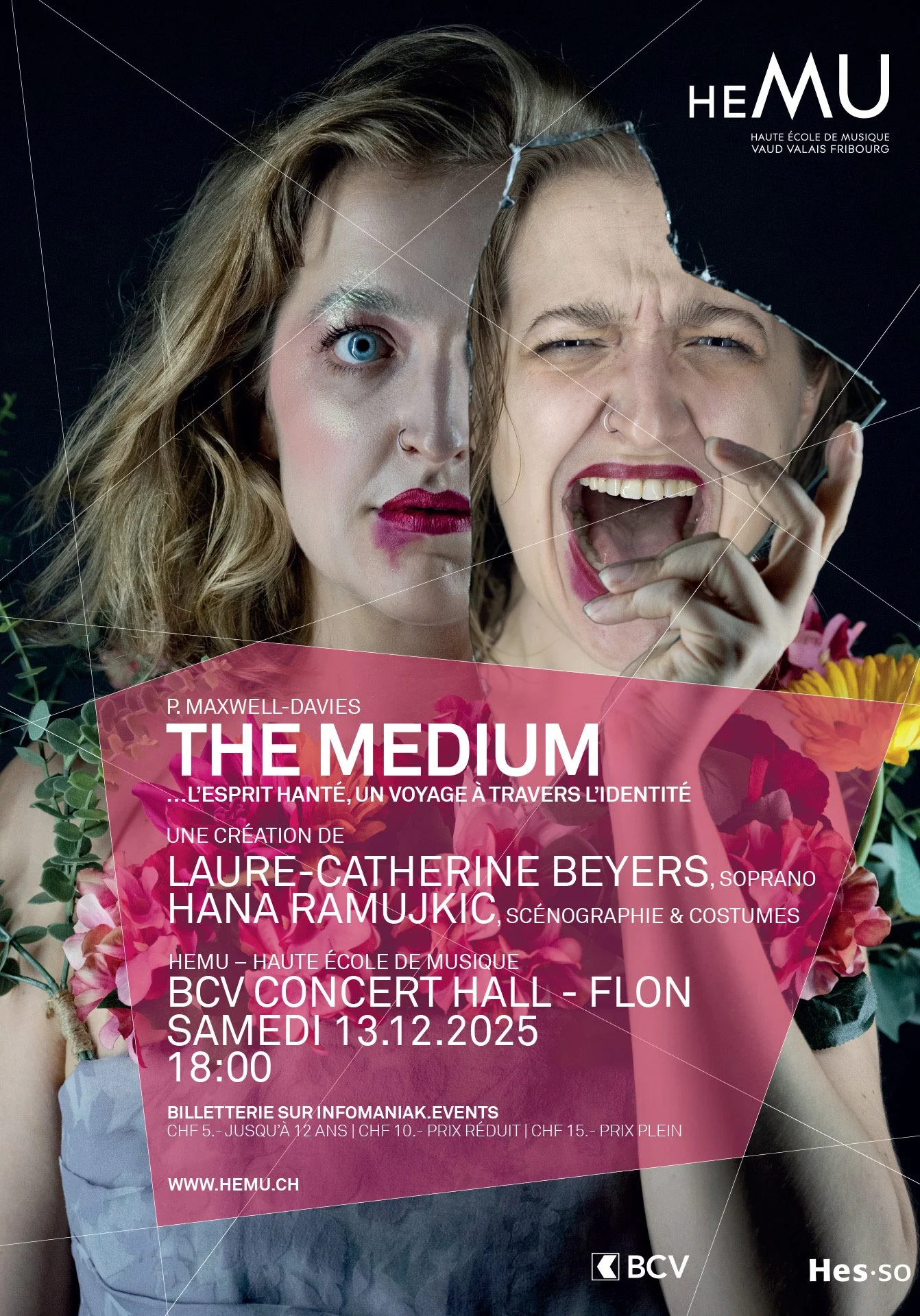
The Medium - The Haunted Mind
The Medium – The Haunted Mind, a Journey Through Identity
Written in 1981 by Peter Maxwell Davies, The Medium is an a cappella opera for solo voice. Though the narrative centers on a spiritualist séance in a marketplace, the work’s true focus lies in the protagonist’s emotional and identity struggles. Her downfall becomes a powerful metaphor: is she truly in contact with supernatural forces, or haunted by her own past?
In this interpretation, the action unfolds within a theatre dressing room, giving the piece a new dimension. The setting draws a parallel between the protagonist’s introspection and that of the artist: what does it mean to inhabit a role? Where does the self end and the character begin? This mise en abyme invites existential reflection — who am I really? Am I shaped only by my past, or can I redefine myself?
The vocal treatment mirrors these questions. Alone and vulnerable, the voice becomes the reflection of the protagonist’s troubled psyche, while the multiple and dissonant layers of sound introduce ambiguity, blurring the boundaries between reality and illusion.
Beyond the supernatural, The Medium delves into themes of deception, identity, and transformation within a haunting atmosphere. It becomes an artistic and psychological quest, probing the delicate frontier between performer and character, illusion and inner truth.
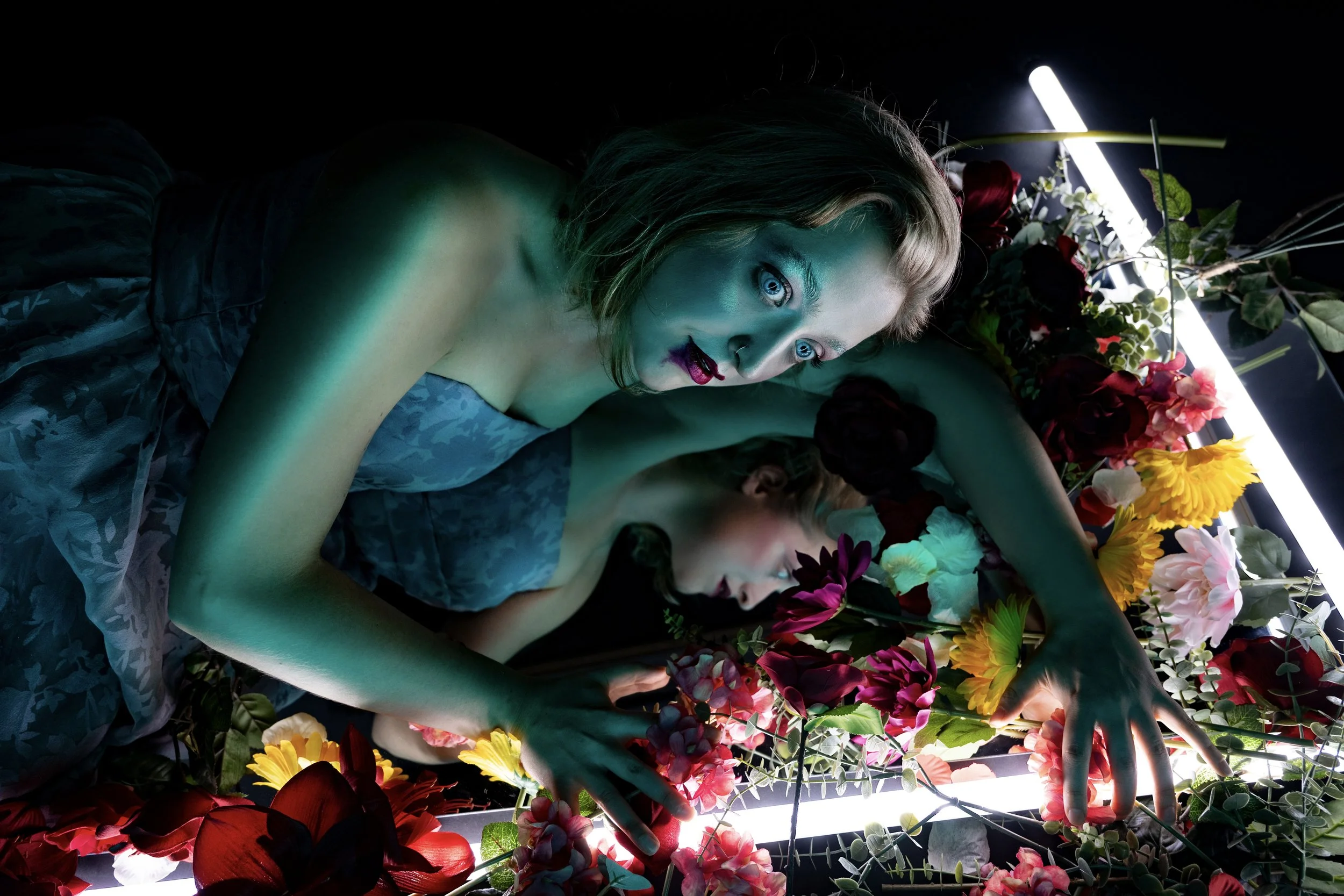
The Medium - The Haunted Mind
The Medium – The Haunted Spirit, a Journey Through Identity
Written in 1981 by Peter Maxwell Davies, The Medium is an a cappella opera for solo voice. Though the narrative centers on a spiritualist séance in a marketplace, the work’s true focus lies in the protagonist’s emotional and identity struggles. Her downfall becomes a powerful metaphor: is she truly in contact with supernatural forces, or haunted by her own past?
In this interpretation, the action unfolds within a theatre dressing room, giving the piece a new dimension. The setting draws a parallel between the protagonist’s introspection and that of the artist: what does it mean to inhabit a role? Where does the self end and the character begin? This mise en abyme invites existential reflection — who am I really? Am I shaped only by my past, or can I redefine myself?
The vocal treatment mirrors these questions. Alone and vulnerable, the voice becomes the reflection of the protagonist’s troubled psyche, while the multiple and dissonant layers of sound introduce ambiguity, blurring the boundaries between reality and illusion.
Beyond the supernatural, The Medium delves into themes of deception, identity, and transformation within a haunting atmosphere. It becomes an artistic and psychological quest, probing the delicate frontier between performer and character, illusion and inner truth.
A project by:
Laure-Catherine Beyers – Soprano
Hana Ramujkić – Stage Design
In collaboration with:
Albert Hochschulz – Sound Engineer & Cameraman
Ingo Kerkhof – Director & Coach
Ticket prices:
€23 Supporter price, €18 Regular price, €13 Various discounts, €9 Colleagues
Advance sales through the Bühnen Graz Ticket Center
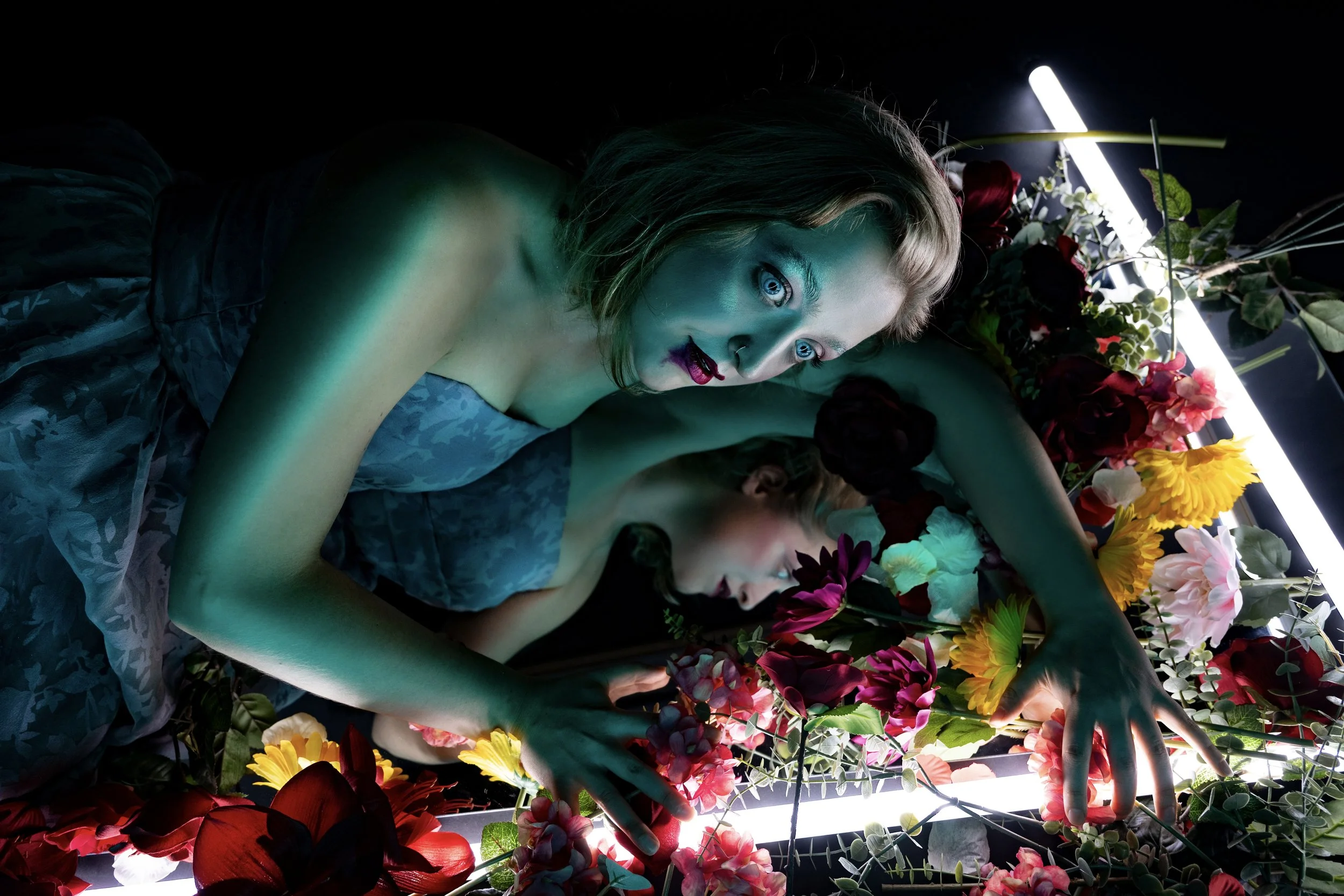
Echoes beyond the Body, the Duino Elegies
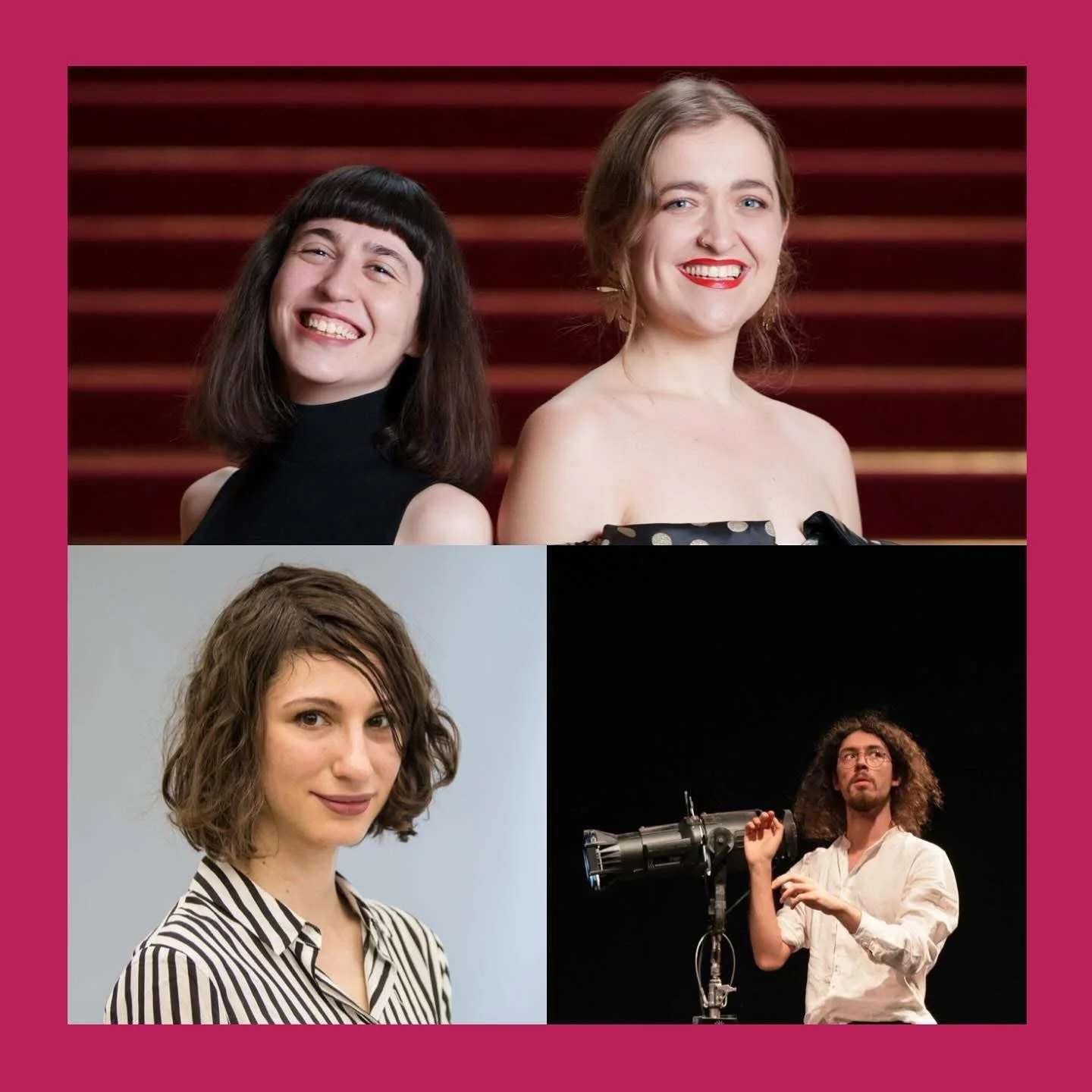
DUO ARDEA – consisting of soprano Laure-Catherine Beyers and pianist Ana Ostojić – impresses with an approach that does not use innovation as mere effect, but rather as an expression of a deeply contemporary artistic identity. The duo assumes multiple roles: as musicians, performers, and catalysts for new works. With their aim to organically intertwine classical and contemporary song, they open up new narrative and sonic spaces.
Their project based on Rainer Maria Rilke’s DUNIO ELEGIES unfolds as a multilayered dramaturgical structure. In close collaboration with composers Sanziana Dobrovicescu and Mihai Codrea, new commissioned works are created in response to Rilke’s poetry. These are thoughtfully interwoven with existing repertoire – some of which dates back to the 17th century – and further enhanced by electronics and performative elements.
The interplay between acoustic instruments and electronic soundscapes is not an add-on, but an integral part of the project’s concept, deeply rooted in its themes. Love, death, religion, morality, and hope are explored as fundamental, unresolvable questions – always with the aim of sharpening our awareness of individual responsibility in a changing world.
The concept stands out for its strong artistic vision, particularly in how it reimagines the song form as something open, fluid, and rooted in the present. With vocal and pianistic excellence, experimental openness, and a keen sense for contemporary relevance, DUO ARDEA is forging a forward-looking path in the world of art song.
Manfred Trojahn - Eurydice, die Liebenden, blind
TICKETS: https://neueoperwien.at/tickets/
Austrian Premiere
Music: Manfred Trojahn
Libretto: Manfred Trojahn, incorporating three poems by Rainer Maria Rilke from Sonnets to Orpheus
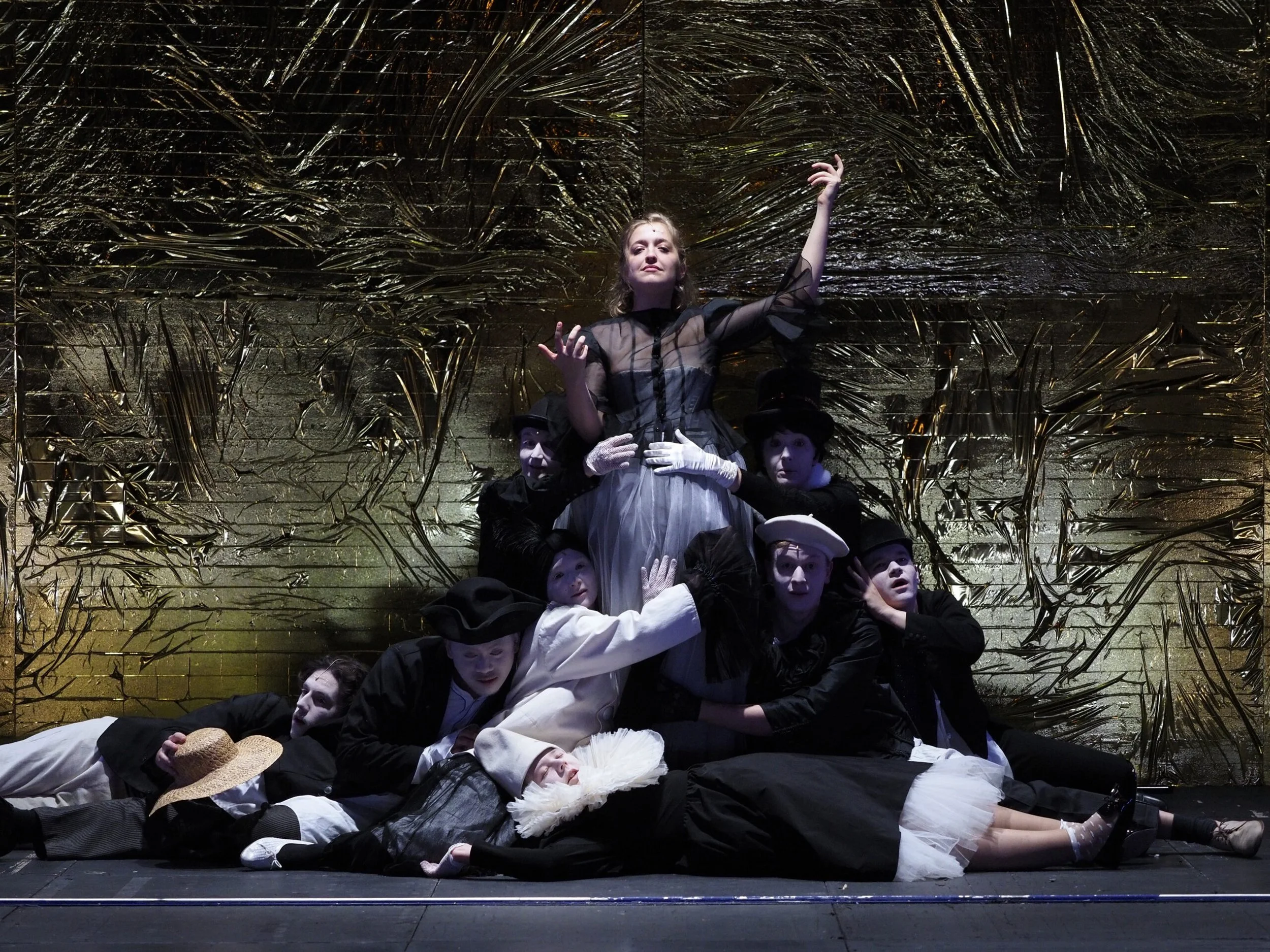
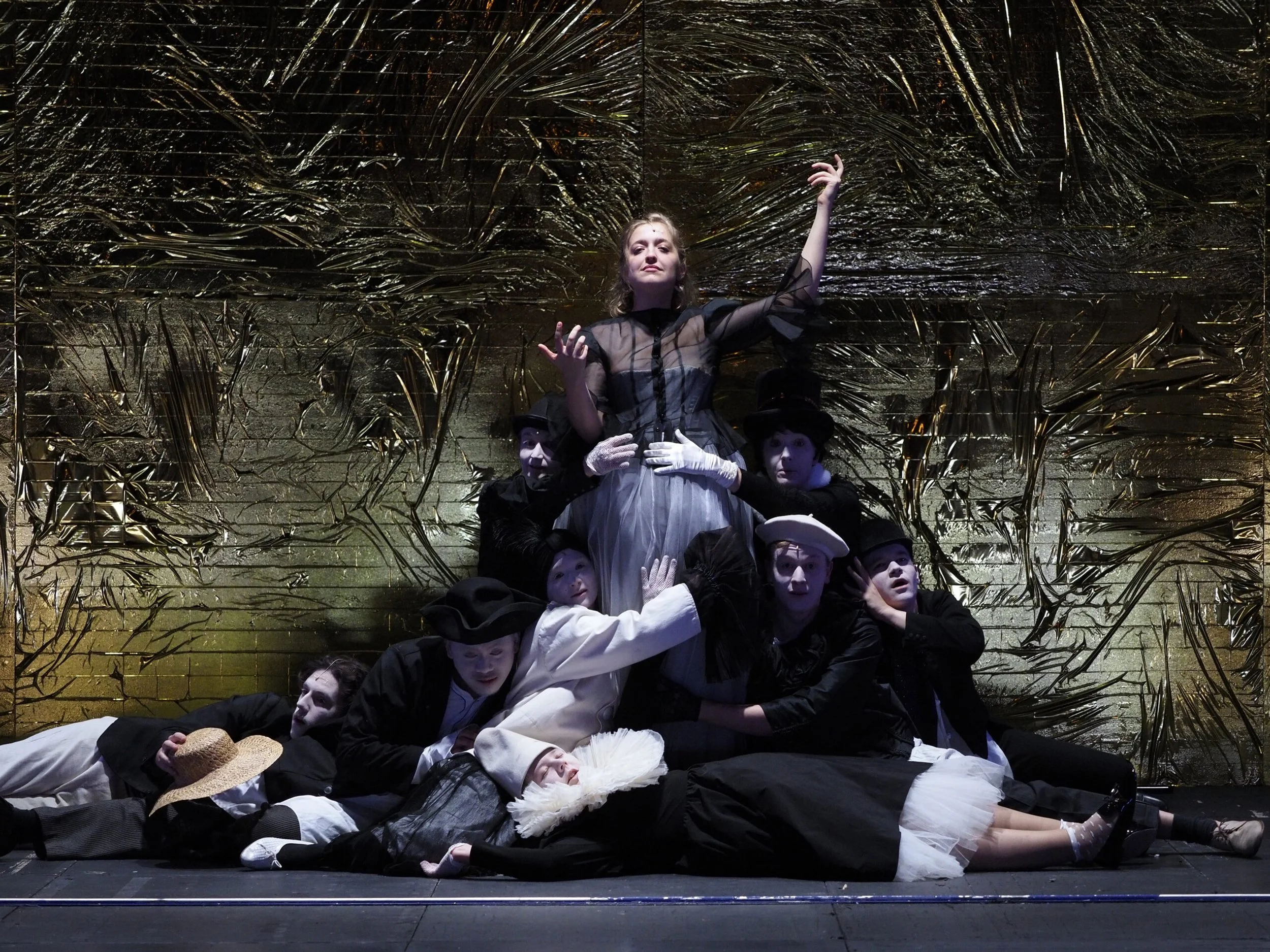
In his opera Eurydice – Die Liebenden, blind, first premiered in 2021, Manfred Trojahn explores a timeless question: can love overcome death? Drawing inspiration from the Greek myth and the poetic reflections of *Rainer Maria Rilke’s Sonnets to Orpheus, Trojahn creates a psychological drama of the soul, musically rooted in the rich spectrum of modern tonality.
The score opens up a world of sensuality, expressive power, and formal variety, capturing the existential tension between life and death, art and transience. At its center stands the actress Eurydice, embarking on her final journey – one that leads inward, toward new encounters and familiar companions from the past. Along the way, she meets the young musician Orphée, who falls passionately in love with her. Yet Pluton, god of the underworld and embodiment of past loves, remains ever-present.
As Orphée tries to rekindle Eurydice’s feelings and believes he can bring new meaning to her life, Eurydice ultimately crosses the threshold to “the other side.” There, she finds a form of fulfillment that perhaps no longer depends on earthly attachment. Her love for Orphée becomes a metaphor for the bond between art and inspiration – fleeting, profound, and beyond human possession.
The German composer, conductor, and essayist Manfred Trojahn (born 1949) has secured a prominent place in contemporary opera with his exceptional works. Through refined musical structures and a distinctly narrative approach, Trojahn’s music becomes the living voice of his characters and their emotions.
Performances:
October 16, 18, 21 & 22, 2025, at 7:00 p.m.
Venue: Halle E, MuseumsQuartier Vienna, Museumsplatz 1, 1070 Vienna
Musical Director: Walter Kobéra
Stage Direction: Juana Inés Cano Restrepo
Set & Costume Design: Dietlind Konold
Lighting Design: Norbert Chmel
Cast:
Eurydice – Laure-Catherine Beyers
Proserpine – Lena Belkina
Orphée – Martin Achrainer
Pluton – Christoph Gerhardus
Madrigalists of the Vienna Chamber Choir (chorus master: Bernhard Jaretz)
Tonkünstler Orchestra of Lower AustriaAustrian Premiere
© Armin Bardel
Manfred Trojahn - Eurydice, die Liebenden, blind
TICKETS: https://neueoperwien.at/tickets/
Austrian Premiere
Music: Manfred Trojahn
Libretto: Manfred Trojahn, incorporating three poems by Rainer Maria Rilke from Sonnets to Orpheus
In his opera Eurydice – Die Liebenden, blind, first premiered in 2021, Manfred Trojahn explores a timeless question: can love overcome death? Drawing inspiration from the Greek myth and the poetic reflections of *Rainer Maria Rilke’s Sonnets to Orpheus, Trojahn creates a psychological drama of the soul, musically rooted in the rich spectrum of modern tonality.
The score opens up a world of sensuality, expressive power, and formal variety, capturing the existential tension between life and death, art and transience. At its center stands the actress Eurydice, embarking on her final journey – one that leads inward, toward new encounters and familiar companions from the past. Along the way, she meets the young musician Orphée, who falls passionately in love with her. Yet Pluton, god of the underworld and embodiment of past loves, remains ever-present.
As Orphée tries to rekindle Eurydice’s feelings and believes he can bring new meaning to her life, Eurydice ultimately crosses the threshold to “the other side.” There, she finds a form of fulfillment that perhaps no longer depends on earthly attachment. Her love for Orphée becomes a metaphor for the bond between art and inspiration – fleeting, profound, and beyond human possession.
The German composer, conductor, and essayist Manfred Trojahn (born 1949) has secured a prominent place in contemporary opera with his exceptional works. Through refined musical structures and a distinctly narrative approach, Trojahn’s music becomes the living voice of his characters and their emotions.
Performances:
October 16, 18, 21 & 22, 2025, at 7:00 p.m.
Venue: Halle E, MuseumsQuartier Vienna, Museumsplatz 1, 1070 Vienna
Musical Director: Walter Kobéra
Stage Direction: Juana Inés Cano Restrepo
Set & Costume Design: Dietlind Konold
Lighting Design: Norbert Chmel
Cast:
Eurydice – Laure-Catherine Beyers
Proserpine – Lena Belkina
Orphée – Martin Achrainer
Pluton – Christoph Gerhardus
Madrigalists of the Vienna Chamber Choir (chorus master: Bernhard Jaretz)
Tonkünstler Orchestra of Lower AustriaAustrian Premiere
© Armin Bardel
Manfred Trojahn - Eurydice, die Liebenden, blind
TICKETS: https://neueoperwien.at/tickets/
Austrian Premiere
Music: Manfred Trojahn
Libretto: Manfred Trojahn, incorporating three poems by Rainer Maria Rilke from Sonnets to Orpheus
In his opera Eurydice – Die Liebenden, blind, first premiered in 2021, Manfred Trojahn explores a timeless question: can love overcome death? Drawing inspiration from the Greek myth and the poetic reflections of *Rainer Maria Rilke’s Sonnets to Orpheus, Trojahn creates a psychological drama of the soul, musically rooted in the rich spectrum of modern tonality.
The score opens up a world of sensuality, expressive power, and formal variety, capturing the existential tension between life and death, art and transience. At its center stands the actress Eurydice, embarking on her final journey – one that leads inward, toward new encounters and familiar companions from the past. Along the way, she meets the young musician Orphée, who falls passionately in love with her. Yet Pluton, god of the underworld and embodiment of past loves, remains ever-present.
As Orphée tries to rekindle Eurydice’s feelings and believes he can bring new meaning to her life, Eurydice ultimately crosses the threshold to “the other side.” There, she finds a form of fulfillment that perhaps no longer depends on earthly attachment. Her love for Orphée becomes a metaphor for the bond between art and inspiration – fleeting, profound, and beyond human possession.
The German composer, conductor, and essayist Manfred Trojahn (born 1949) has secured a prominent place in contemporary opera with his exceptional works. Through refined musical structures and a distinctly narrative approach, Trojahn’s music becomes the living voice of his characters and their emotions.
Performances:
October 16, 18, 21 & 22, 2025, at 7:00 p.m.
Venue: Halle E, MuseumsQuartier Vienna, Museumsplatz 1, 1070 Vienna
Musical Director: Walter Kobéra
Stage Direction: Juana Inés Cano Restrepo
Set & Costume Design: Dietlind Konold
Lighting Design: Norbert Chmel
Cast:
Eurydice – Laure-Catherine Beyers
Proserpine – Lena Belkina
Orphée – Martin Achrainer
Pluton – Christoph Gerhardus
Madrigalists of the Vienna Chamber Choir (chorus master: Bernhard Jaretz)
Tonkünstler Orchestra of Lower AustriaAustrian Premiere
© Armin Bardel
Manfred Trojahn - Eurydice, die Liebenden, blind
TICKETS: https://neueoperwien.at/tickets/
Austrian Premiere
Music: Manfred Trojahn
Libretto: Manfred Trojahn, incorporating three poems by Rainer Maria Rilke from Sonnets to Orpheus
In his opera Eurydice – Die Liebenden, blind, first premiered in 2021, Manfred Trojahn explores a timeless question: can love overcome death? Drawing inspiration from the Greek myth and the poetic reflections of *Rainer Maria Rilke’s Sonnets to Orpheus, Trojahn creates a psychological drama of the soul, musically rooted in the rich spectrum of modern tonality.
The score opens up a world of sensuality, expressive power, and formal variety, capturing the existential tension between life and death, art and transience. At its center stands the actress Eurydice, embarking on her final journey – one that leads inward, toward new encounters and familiar companions from the past. Along the way, she meets the young musician Orphée, who falls passionately in love with her. Yet Pluton, god of the underworld and embodiment of past loves, remains ever-present.
As Orphée tries to rekindle Eurydice’s feelings and believes he can bring new meaning to her life, Eurydice ultimately crosses the threshold to “the other side.” There, she finds a form of fulfillment that perhaps no longer depends on earthly attachment. Her love for Orphée becomes a metaphor for the bond between art and inspiration – fleeting, profound, and beyond human possession.
The German composer, conductor, and essayist Manfred Trojahn (born 1949) has secured a prominent place in contemporary opera with his exceptional works. Through refined musical structures and a distinctly narrative approach, Trojahn’s music becomes the living voice of his characters and their emotions.
Performances:
October 16, 18, 21 & 22, 2025, at 7:00 p.m.
Venue: Halle E, MuseumsQuartier Vienna, Museumsplatz 1, 1070 Vienna
Musical Director: Walter Kobéra
Stage Direction: Juana Inés Cano Restrepo
Set & Costume Design: Dietlind Konold
Lighting Design: Norbert Chmel
Cast:
Eurydice – Laure-Catherine Beyers
Proserpine – Lena Belkina
Orphée – Martin Achrainer
Pluton – Christoph Gerhardus
Madrigalists of the Vienna Chamber Choir (chorus master: Bernhard Jaretz)
Tonkünstler Orchestra of Lower AustriaAustrian Premiere
© Armin Bardel
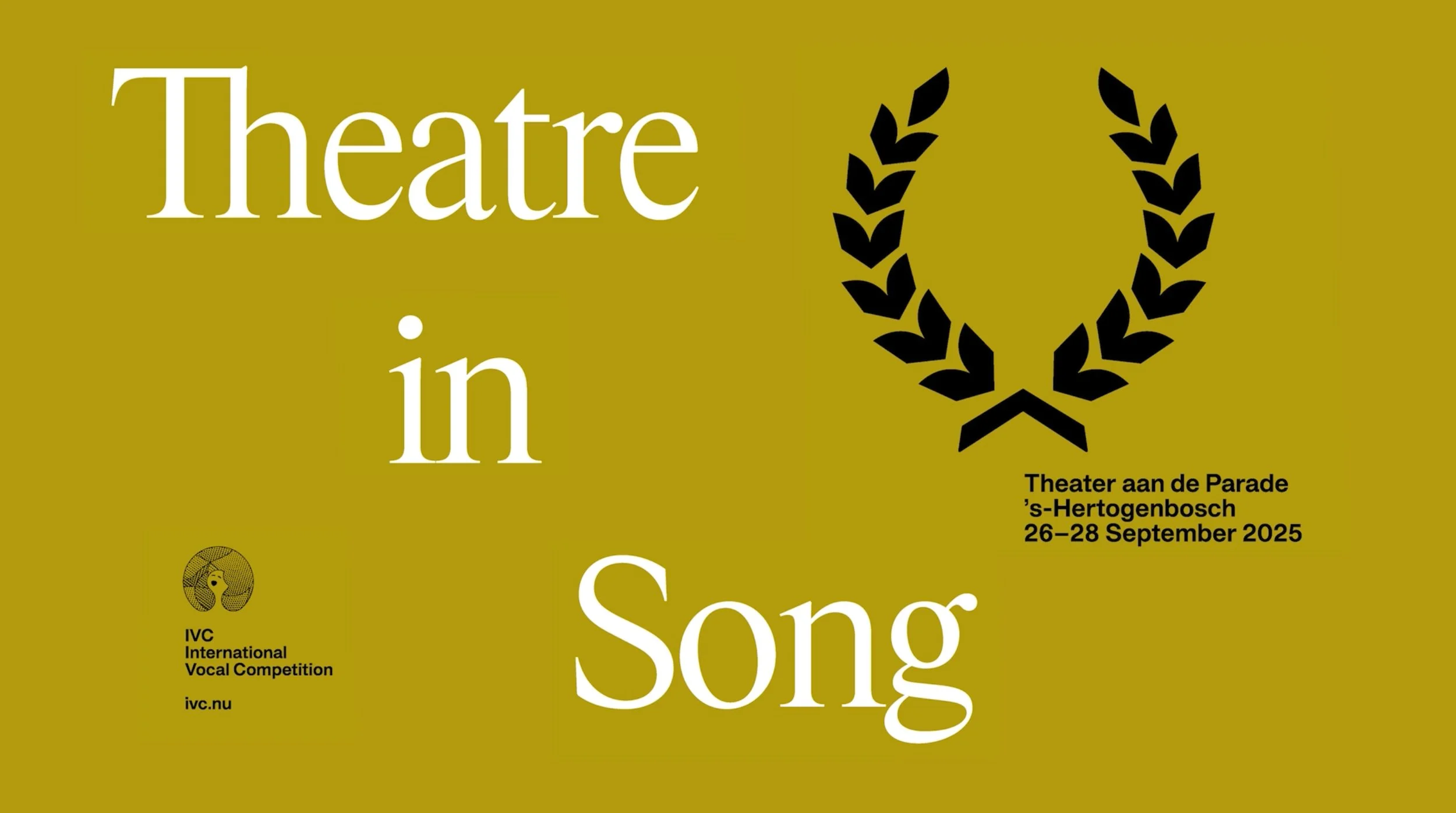
Finals of the International Vocalist Concours (IVC) ‘s-Hertogenbosch ‘Theatre in Song’ 2025
Duo Ardea presents their program ‘It’s Complicated’ at the finals of the IVC Theatre in Song 2025 competition in ‘s-Hertogenbosch.
Laure-Catherine Beyers, soprano
Ana Ostojić, piano
Livestream: https://youtube.com/@vocalcompetition?si=TuWGOcxeQtukb_A8
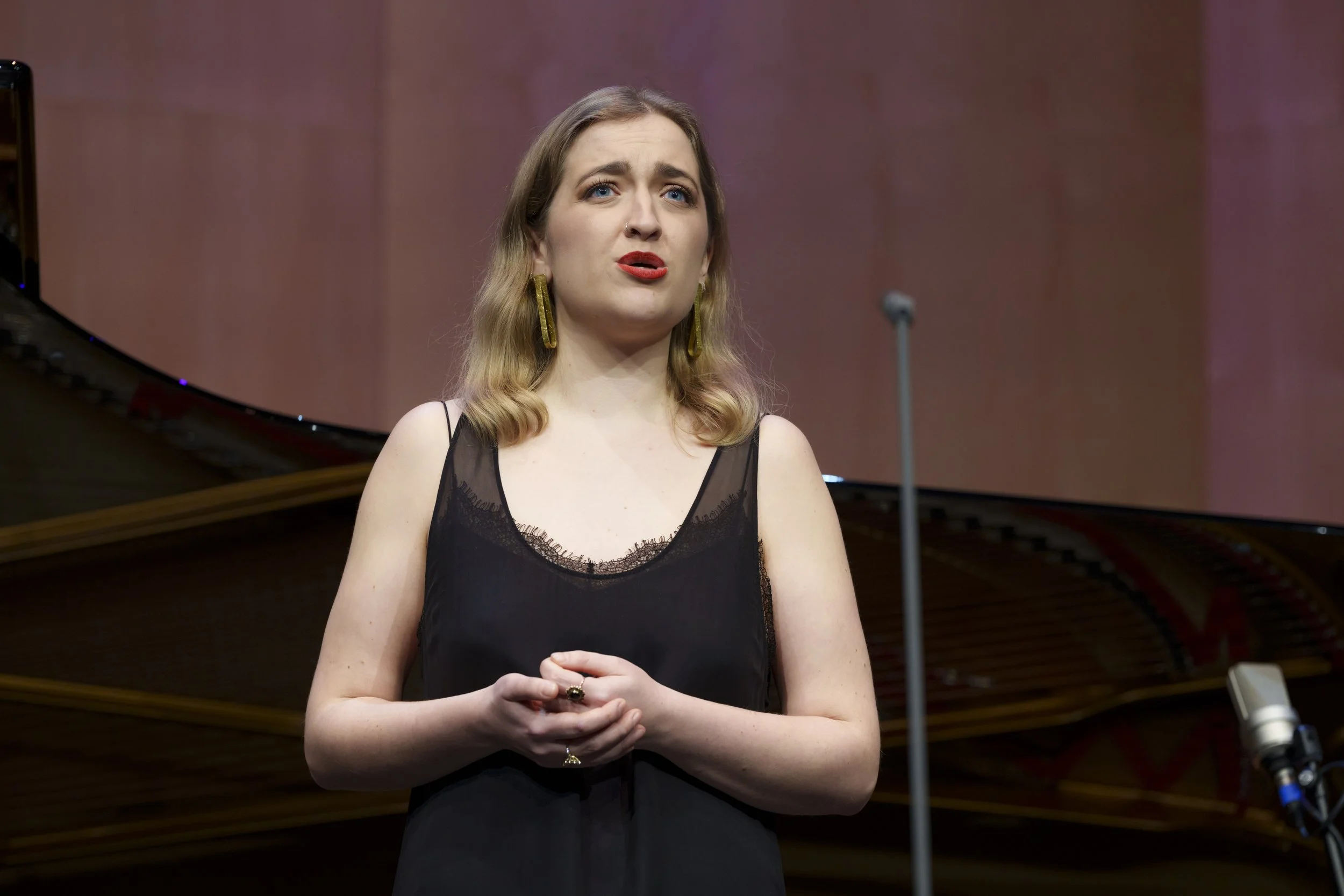
Umbruch und Kontinuität: Ein Gesprächskonzert zu Wendepunkten in der Musikgeschichte
Lecture Recital on upheavals in Music History at the Ausseer Gespräche 2025
Laure-Catherine Beyers, soprano
Marlene Heiss, piano
Gerd Kühr, Federico Celestini, Ulf Bästlein, Konstanze Wimmer